

Ghanaians want results, not press conferences – Sulemanna Braimah to OSP
By Hubeyidatu Mumuni
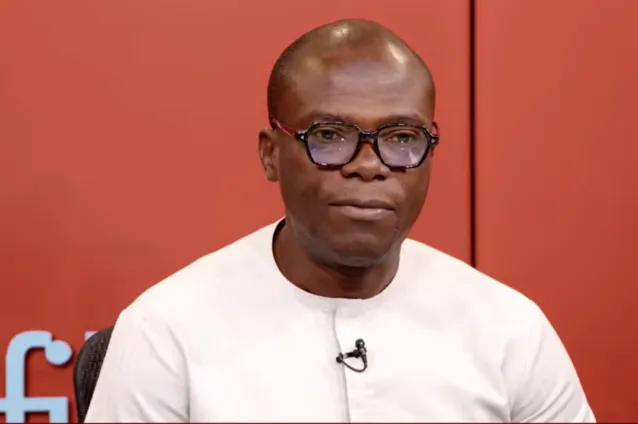
Media analyst and Executive Director of the Media Foundation for West Africa (MFWA), Sulemanna Braimah, has challenged the Office of the Special Prosecutor (OSP) to demonstrate tangible results in Ghana’s fight against corruption, saying Ghanaians are more interested in outcomes than explanations.
Speaking on JoyNews’ Newsfile, Mr Braimah said the effectiveness of the OSP should ultimately be measured by its ability to deliver results rather than the number of press conferences or explanations it gives to the public.
“My concern when it comes to the Office of the Special Prosecutor again is perhaps a concern expressed by many Ghanaians in terms of people want results. People don’t really want a lot of the explanations, a lot of the press conferences,” he said.
Mr Braimah acknowledged that the OSP was established to address limitations associated with existing anti-corruption institutions, including the Economic and Organised Crime Office (EOCO), the Financial Intelligence Centre (FIC), the Criminal Investigations Department (CID) and the Commission on Human Rights and Administrative Justice (CHRAJ).
He noted, however, that the creation of the OSP had raised questions about whether its legal framework provided sufficient independence to effectively investigate and prosecute corruption.
“I’ve always had the view that the way the OSP law was crafted in the first place, in terms of some aspects independence, but in other aspects you are under the Attorney-General, somehow, was problematic,” Mr Braimah stated.
He also questioned whether the appointment of the Special Prosecutor by the President could, on its own, guarantee the independence needed to prosecute individuals associated with the government that appointed the office holder.
“If President Mahama appoints, is it because the name says Office of the Special Prosecutor and then that guarantees some independence, and therefore that person will be able to prosecute NDC folks or otherwise?” he asked.
According to Mr Braimah, the bigger challenge goes beyond the OSP and concerns Ghana’s overall approach to fighting corruption.
“For me, the way the law was created and our own attitudes towards the fight against corruption is where the problem lies,” he said.
He questioned the impact of the OSP after several years in operation, arguing that the public should be able to identify clear improvements in the fight against corruption.
“This guy has been—my brother has been there for the last 60 months. So even if you take the five months away and we are talking about 55 months, and for me, I really struggle to be able to point to what realistically would convince me that the setting up of this institution has really helped the country in the fight against corruption,” he said.
Mr Braimah further expressed concern that corruption appeared to be persisting despite the establishment of several institutions specifically mandated to combat it.
“It doesn’t appear. The more we have institutions, the more corruption grows,” he stated.
Turning to the controversy surrounding the AKSA Energy deal, he questioned whether EOCO could conduct a thorough investigation into individuals who may have links to the government.
“If we thought EOCO was not independent enough and therefore we needed OSP, are we going to have a thorough investigation by EOCO against persons who are likely to be affiliated or associated with the same government?” he questioned.
Mr Braimah said the AKSA matter should therefore be viewed within the broader discussion about the independence, capacity and effectiveness of Ghana’s anti-corruption institutions.
He also questioned whether Ghana was genuinely prepared to confront corruption regardless of the political affiliation of persons involved in alleged wrongdoing.
“And so for me, it’s the general thing about: are we really ready to fight corruption or we just continue to create institutions in the name of fighting corruption?” he asked.
His comments come amid renewed discussions over the respective roles of the OSP, EOCO and the Attorney-General in corruption-related investigations and prosecutions, particularly following the Supreme Court’s ruling on the powers of the Attorney-General.
About The Author

 UNGA81: Ghana will push for stronger African voice under AU Chairmanship – Mahama
  UNGA81: Ghana has achieved a ‘dramatic economic turnaround’ – Mahama
  UNGA81: ‘No race Is superior; no nation Is inferior’ – Mahama
  Ayariga pauses Agbogbloshie 24-hour economy market project
  No increase in electricity and water Tariffs from Thursday, October 1 – PURC
  O/R: Three remanded after Police uncover 5,164 suspected narcotics parcels
  BoG to introduce new Ghana Cedi notes in November