

Ghana must produce more and borrow less to achieve prosperity – Dep. Finance Minister
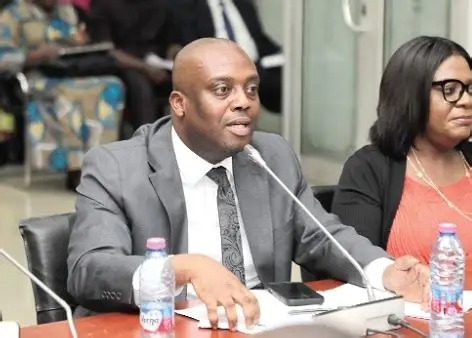
Deputy Finance Minister Thomas Nyarko Ampem has outlined the government’s plan to shift Ghana’s economy from a focus on macroeconomic stability to increased domestic production, job creation and improved household incomes under the 2027 budget.
Addressing Members of Parliament at a post-budget workshop, Mr. Ampem said the government was determined to ensure that the gains made in stabilising the economy translated into better living conditions for citizens.
He cited comments by Dr. Atul Fawcett to underscore the need for economic stability to support broader development, stating: “Macroeconomic stability is not our destination, it is the foundation. A stable economy that does not create jobs or improve household incomes is an unfinished recovery.”
According to him, the 2027 budget is intended to strengthen Ghana’s productive capacity by encouraging local manufacturing, processing more raw materials and expanding opportunities for sustainable employment.
“Our ambition is to build a new economy that produces more of what Ghana consumes, processes more of what Ghana produces, exports more value and creates sustainable jobs,” he said.
Mr. Ampem also outlined the government’s economic projections for 2027, with real Gross Domestic Product (GDP) growth expected to reach at least 5.2 per cent. Non-oil GDP growth is projected at a minimum of 5.7 per cent.
Inflation is expected to remain within the target range of 8 per cent, plus or minus two percentage points, while the government is aiming for a primary surplus of 0.5 per cent of GDP on a commitment basis.
The country’s gross international reserves are also expected to provide import cover for at least six months.
Mr. Ampem explained that the targets were designed to preserve macroeconomic stability while creating sufficient fiscal space for investments in productive sectors.
He further cautioned against relying solely on borrowing or expenditure cuts to achieve economic transformation, arguing that sustainable growth would require responsible investment and stronger productive capacity.

“Our guiding principle is that we cannot borrow our way to prosperity, neither can we cut our way to transformation. We must invest responsibly, produce competitively and grow sustainably,” he stated.
He maintained that the 2027 budget would support the development of a more productive economy through stronger local industries, increased export value and the creation of sustainable employment opportunities.

About The Author

 Wontumi seeks settlement of EXIM Bank case with GH¢25m offer
 10 shops burnt, one damaged in Tema Community 1 Market fire
 Circle fire kills one, destroys over 100 wooden structures near STC yard, Accra
 Ghana to restrict raw cashew exports for first three months of harvesting season
 Mahama promises additional funding to sustain Nadkansco factory operations
 Mfantsipim @150: Margins Group CEO gives back to Mfantsipim with 9,000 meals