

Gov’t shifts focus to jobs and production in 2027 budget – Dep. Finance Minister
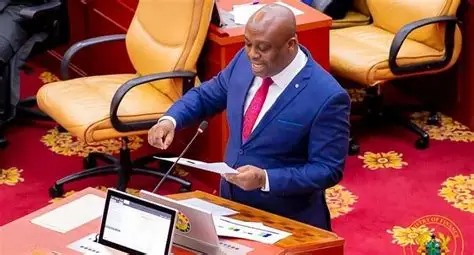
Deputy Finance Minister Thomas Nyarko Ampem has urged Parliament to thoroughly examine the 2027 national budget, describing it as a social contract between the government and the Ghanaian people that must be backed by accountability and effective implementation.
Speaking at a post-budget workshop for Members of Parliament, Mr. Ampem stressed that lawmakers had a constitutional duty to scrutinise the government’s financial proposals, approve the proposed financing arrangements and ensure that commitments outlined in the budget were fulfilled.
He said the budget should be viewed as more than a declaration of government policy, emphasising the responsibility of Parliament to ensure that its promises translated into meaningful outcomes for citizens.
“Honourable members, the 2027 budget is not just a statement of government’s intentions, but it is a contract with the Ghanaian people,” he stated.
The Deputy Minister welcomed parliamentary oversight, noting that constructive criticism and detailed examination of the proposals would help improve the quality of the budget and strengthen its implementation.
He also outlined the government’s changing economic priorities, explaining that the focus was moving beyond restoring macroeconomic stability towards expanding production, generating employment and improving living standards.
Mr. Ampem described the country’s economic recovery as a three-stage process, with each year representing a different phase of the government’s agenda.
“In 2025, we restored stability. In 2026, we demonstrated resilience. And in 2027, our task is to convert stability into production, jobs and prosperity,” he said.
To support his assessment of the economy, he highlighted key indicators showing improvements in growth, inflation, external reserves and public finances.
According to the Deputy Finance Minister, Ghana recorded economic growth of 6.2 per cent in the first half of 2026, surpassing the government’s annual growth target of 4.8 per cent.

He further disclosed that inflation had eased to 5.5 per cent in October 2026, while gross international reserves stood at US$12.1 billion at the end of September, providing 4.5 months of import cover.
On the fiscal front, Mr. Ampem said the government had recorded a primary surplus of 1.4 per cent of Gross Domestic Product (GDP) as of the end of October 2026, reflecting its efforts to strengthen fiscal discipline.
He also reported that public debt had declined to 47.5 per cent of GDP.
“These statistics show an economy that is more stable, more resilient and better positioned to support investment,” he said.
Mr. Ampem said the 2027 budget would seek to consolidate the gains made in the previous two years while directing greater attention towards productive economic activities.
He maintained that the central task ahead was to ensure that improvements in the country’s economic indicators translated into increased production, more jobs and better economic opportunities for Ghanaians.

About The Author

 Wontumi seeks settlement of EXIM Bank case with GH¢25m offer
 10 shops burnt, one damaged in Tema Community 1 Market fire
 Circle fire kills one, destroys over 100 wooden structures near STC yard, Accra
 Ghana to restrict raw cashew exports for first three months of harvesting season
 Mahama promises additional funding to sustain Nadkansco factory operations
 Mfantsipim @150: Margins Group CEO gives back to Mfantsipim with 9,000 meals