

Zhu Rongji cremated in Beijing as Xi Jinping leads final farewell
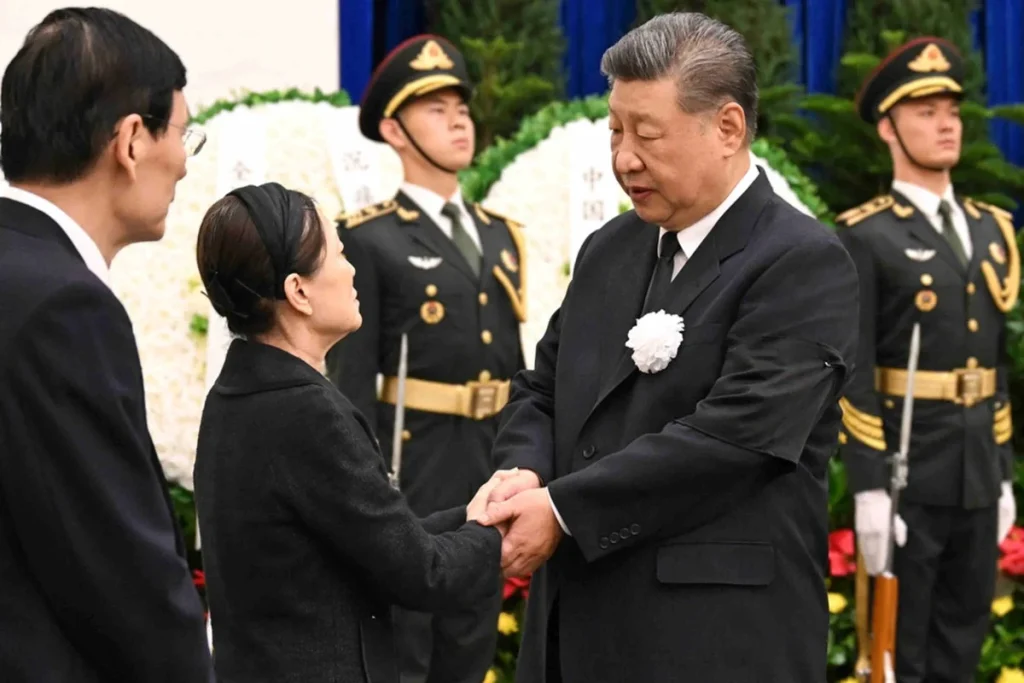
Former Chinese Premier Zhu Rongji was cremated in Beijing on Tuesday morning, as President Xi Jinping joined senior leaders to honour him at a farewell ceremony.
The ceremony was held on August 18, 2026, at the Babaoshan Revolutionary Cemetery, a site in Beijing associated with funeral ceremonies for prominent Chinese political and state figures.
Xi Jinping attended the ceremony alongside other senior Chinese leaders, who gathered to pay their final respects to Zhu Rongji and convey their condolences to his family. Officials described the occasion as “a solemn moment to honour the former premier and his contributions to the country.”
As part of the proceedings, Xi and the other leaders stood before Zhu’s remains and bowed three times in tribute. The gesture was described as “a formal expression of respect for the former national leader and his long public service.”
The ceremony marked the end of the official farewell process for Zhu, who served as China’s premier between 1998 and 2003 and played an important role in the country’s economic reform programme.
Zhu was one of China’s most influential economic policymakers during a period of rapid transformation. His time in national leadership coincided with major changes in the country’s economic structure, financial institutions and relationship with global markets.
His leadership was strongly associated with economic reform, particularly efforts to restructure state-owned enterprises and improve the country’s financial system. At the time, China faced significant challenges in managing inefficient state-owned companies and strengthening financial institutions.
As premier, Zhu pushed for measures intended to make state enterprises more competitive while dealing with unemployment and other social pressures arising from economic restructuring. His approach reflected the government’s efforts to modernise the economy while maintaining growth.
He was also known for his emphasis on financial stability and stronger government management of public finances. His approach earned him a reputation as a determined administrator who was prepared to implement difficult reforms.
Zhu’s tenure also coincided with a significant expansion of China’s participation in the global economy. One of the most important developments during his premiership was China’s accession to the World Trade Organization in 2001.
The move marked a major step in China’s integration into international trade and created new opportunities for Chinese businesses to access overseas markets. It also increased foreign investment and strengthened China’s position in global economic affairs.
Zhu’s role in that period made him an important figure in the country’s economic history. His administration helped manage the transition as China increasingly opened its economy and became more closely connected to international markets.
Before reaching the national leadership, Zhu had established his reputation through his work in Shanghai. He served in senior positions in the city and became known for his efforts to improve its economic performance and administration.
His experience in Shanghai contributed to his rise within the national leadership and strengthened his credentials as an economic manager. His record in the city helped establish the reputation that later defined his national career.
When he became premier in 1998, China was facing a number of economic and financial challenges. The government was seeking to maintain economic growth while addressing weaknesses in state-owned enterprises and the banking sector.
Zhu’s government pursued reforms intended to modernise the economy and improve the effectiveness of government institutions. These policies were sometimes difficult and generated social and economic pressures, but they were presented as necessary steps toward long-term development.
His leadership style was widely regarded as direct and disciplined. Zhu frequently spoke about the need to confront economic problems rather than allow them to grow into larger national challenges.
His public career consequently became closely associated with economic reform and the restructuring of China’s economy. Supporters viewed his approach as necessary for strengthening the foundations of China’s economic growth.
Tuesday’s ceremony in Beijing brought renewed attention to that legacy as China’s current leadership gathered to honour him. The event also highlighted the continuing importance attached to former senior leaders in the country’s political tradition.
The presence of Xi Jinping was particularly significant because official farewell ceremonies for former senior leaders are important occasions within China’s political tradition.
Such ceremonies provide an opportunity for the state to recognise the contributions of figures who have served at the highest levels of government.
Xi and the other leaders’ three bows before Zhu’s remains represented a formal expression of respect. Their condolences to Zhu’s family also reflected the solemn nature of the occasion.
Babaoshan Revolutionary Cemetery has long been an important location for state funerals and memorial ceremonies in Beijing. The choice of the cemetery for Zhu’s final farewell reflected his position as a former premier and senior figure in the Chinese state.
The cremation also marked the physical conclusion of a long public career that spanned some of the most important decades in modern Chinese history.
Zhu was born in 1928 and entered public service during a period when China was undergoing profound political and economic changes. Over the course of his career, he rose through the ranks of government and eventually became one of the country’s most prominent national leaders.
His career was shaped by China’s transition toward a more market-oriented economy. Although the reforms introduced during his tenure brought significant economic opportunities, they also created challenges for workers and communities affected by restructuring.
Among the major issues facing the government were reforms to state-owned enterprises, the strengthening of financial institutions and the management of economic risks.
Zhu became particularly respected for his willingness to address such problems directly. His reputation as a tough economic manager followed him throughout his time in national office.
After completing his term as premier in 2003, Zhu largely withdrew from frontline politics. Nevertheless, his record continued to attract attention from economists, historians and observers of China’s development.
His contribution has often been discussed in relation to the economic foundations that supported China’s rapid growth in the years that followed. His policies remain an important part of discussions about the reforms that transformed China’s economy.
The farewell ceremony therefore carried significance beyond the immediate mourning of a former national leader. It represented an official recognition of a political career that was closely linked to China’s economic transformation.
For his family, the ceremony was also an emotional final farewell. The presence of the country’s senior leadership demonstrated the respect accorded to Zhu and provided a public expression of sympathy to his relatives.
The three bows by Xi and other leaders were followed by the formal completion of the cremation process at the cemetery. The proceedings brought the official farewell to an end as family members, officials and senior leaders marked the former premier’s passing.
Zhu’s passing leaves behind a political legacy connected particularly to economic reform, financial management and China’s growing participation in the global economy.
About The Author

 Nollywood veteran actor Olu Jacobs passes away at 84
  Meta goes on trial over social media addiction and child privacy claims
  BoG to introduce new Ghana Cedi notes in November
  UNGA81: Ghana will push for stronger African voice under AU Chairmanship – Mahama
  UNGA81: Ghana has achieved a ‘dramatic economic turnaround’ – Mahama
  UNGA81: ‘No race Is superior; no nation Is inferior’ – Mahama